
Integrated Laboratory Transport Systems to Stop Outbreaks
The Integrated Laboratory Transport Systems to Stop Outbreaks program enhances diagnosis and outbreak response across Africa (DRC, Guinea, Malawi, Tanzania and Uganda). It strengthens lab sample referral and transportation systems by modernizing logistics and data to enable timely, accurate diagnoses for diseases like polio, measles, yellow fever, Ebola, mpox and cholera—ultimately saving lives.
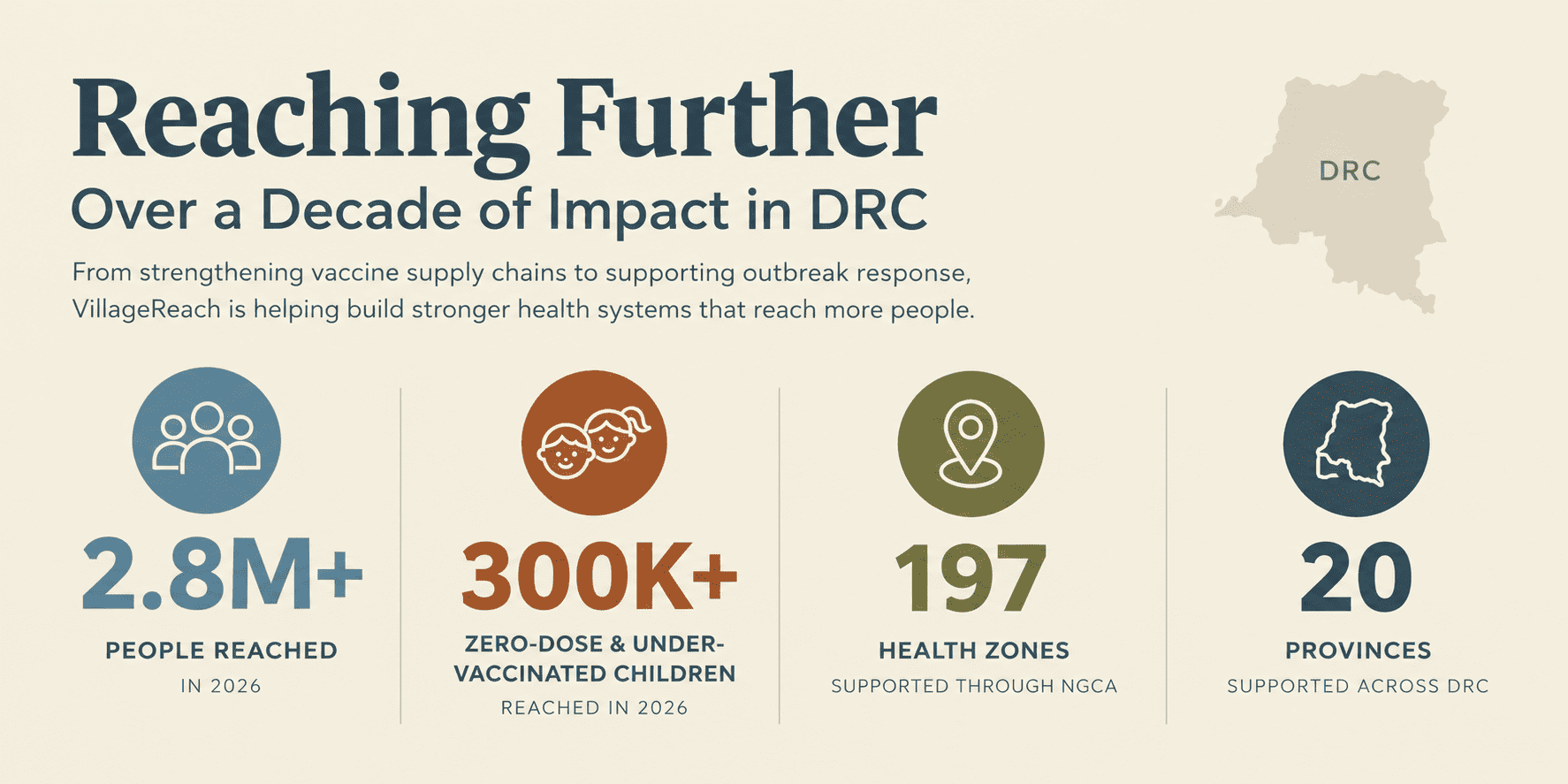
Reaching Further: Over a Decade of Impact in DRC
In the Democratic Republic of the Congo (DRC), reaching a child with a vaccine is rarely straightforward. Communities are separated by rivers, forests and vast distances, and heavy rain can make already difficult journeys even harder. Yet reaching people requires more than determination. It...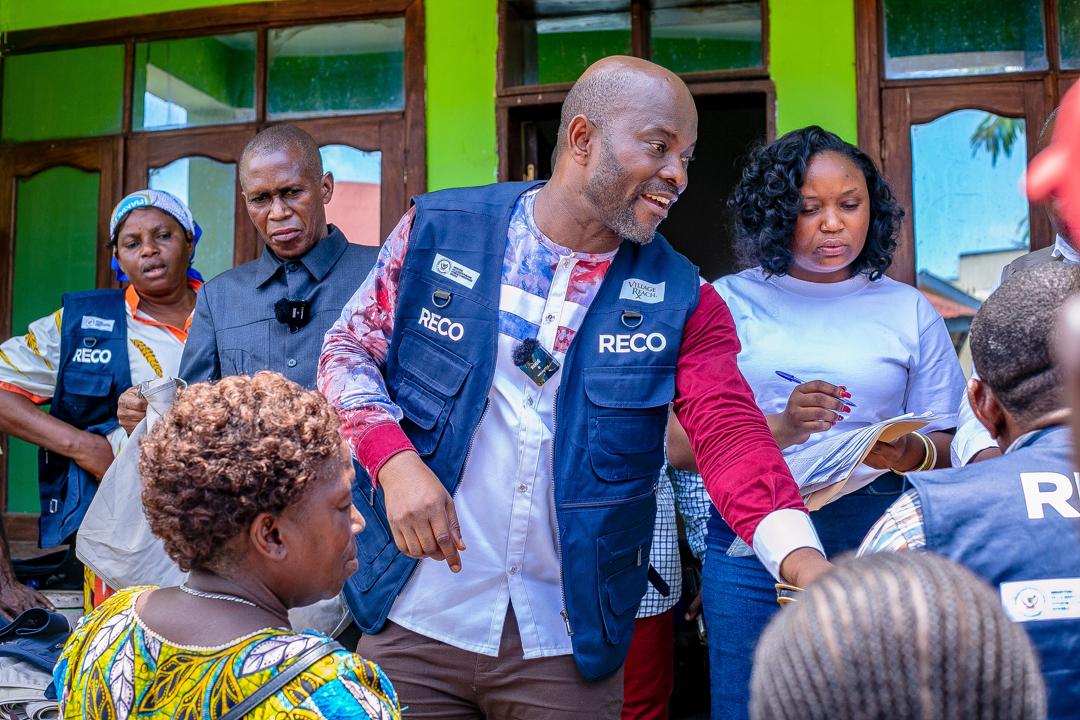
Before Ebola Reached Tshopo, the Foundation for Preparedness Was Already in Place
When the Ebola Bundibugyo virus was detected in neighboring Ituri province in May 2026, health officials in Tshopo province knew they had little time to prepare. The risk extended beyond geography. As former districts of the historic Province Orientale, Ituri and Tshopo remain closely...
How Better Sample Transport Is Strengthening Disease Surveillance in Côte d’Ivoire
A biological sample is only as valuable as the condition it’s in when it reaches the laboratory. From collection at a health facility to laboratory testing, samples must be properly packaged, kept within the required temperature range and handled safely. Delays, heat exposure or...
The Traditional Healer Who Wants More Patients to Go to Hospital
By Wema Kamuzora, Francisca Pratap (CIHEB Tanzania) and Ronald Ng’eno Outside the home of Francis, a traditional healer, a thatched shelter made from wooden poles offers welcome shade. It serves as a waiting area where patients sit, chatting with neighbors or watching children play...
OPINION: To Contain Ebola, Strengthen Health Systems Long Before the Next Outbreak
When an outbreak emerges, how quickly it is contained often depends on decisions made years earlier. This was the central lesson I took away from the Global Health Security Conference in Kuala Lumpur. As Country Director for VillageReach in the Democratic Republic of Congo,...
Strengthening DRC's Cholera Fight through Community Surveillance, Swift Sample Transport and Medical Aid
Also in: French
Read the French version of the blog here In the Tabac Congo health area in Tanganyika Province in the DRC, Sumbya Saidi begins his day by visiting different households in his community. As a community health volunteer in a province facing several disease outbreaks,...
From Weeks to Days: How Guinea Built a Nationwide Sample-Transport Network to Maintain Its Polio-Free Status
Also in: French
Read the French version of the blog here. When a patient with sudden paralysis arrived at a hospital in Siguiri, Guinea, health workers knew they were racing against time. Confirming polio would depend on how quickly a stool sample could travel more than 700...
How Dedicated Sample Transporters Are Speeding Cholera Response in the DRC
At 4 a.m., Julien Nyembo left home on a motorbike to collect suspected cholera samples from a remote health-zone office in Tanganyika province in the DRC. By the time he reached the central hub, it was already 3 p.m. The journey was difficult. Along...
From Fear to Vigilance - Strengthening Zanzibar’s Community Health Workers
In Zanzibar, Tanzania, Rayuu Kombo now walks in her community with a stronger purpose. As a Community Health Worker, she is visiting households, checking on mothers and children, looking for danger signs and helping families seek care earlier. This shift is part of a...
Against Anthrax: How Uganda is Strengthening Community-Based Surveillance
In Uganda’s western district of Ibanda, anthrax is a familiar enemy. As one health worker said, the word ‘anthrax’ has “become part of our vocabulary.” But this familiarity has not led to safety. Communities have lived with recurring outbreaks for years, largely because the...
Postal Power: How Training Postal Agents is Enhancing Côte d’Ivoire’s Fight Against Disease Outbreaks
Across Africa, effective disease surveillance faces a common hurdle: unreliable transport of medical samples, which often leads to delays, compromised quality and slower outbreak responses, putting public health at risk. In Côte d’Ivoire, for example, these challenges are particularly acute, where delivery setbacks can...
Racing Against Ebola: How VillageReach Helped Confirm the Outbreak in DRC
When news of suspected Ebola cases began circulating in Bulape, a remote health zone in the Democratic Republic of Congo (DRC), the urgency was immediate. The fear of hemorrhagic fever prompted provincial health authorities to act fast – and VillageReach was there to help....
How Electric Motorcycles are Speeding Lab Samples and Outbreak Response Across Malawi
In a disease outbreak, every minute matters. A delayed lab result can lead to increased exposure, prolonged treatments, and unnecessary loss of life. That’s why VillageReach, in partnership with organizations like G4S, is transforming sample transport in Malawi. What started as a private-sector workaround...
Tanzania among five African nations to benefit from disease diagnosis programme
Iringa. Tanzania is set to benefit from a groundbreaking initiative aimed at improving the diagnosis of infectious diseases, including polio, measles, yellow fever, Ebola, mpox, and cholera.
VillageReach Commences Program to Strengthen Epidemic Preparedness and Response Across Africa
VillageReach (www.VillageReach.org) announces the launch of a program funded by Takeda Pharmaceutical Company Limited to enhance laboratory sample referral and transportation systems for epidemic-prone infectious diseases across Africa. This initiative, which commenced in January 2025, will strengthen health systems in the Democratic Republic of...
VillageReach, Takeda partner to improve disease diagnosis in Africa
AFRICA—The U.S.-based nonprofit organisation VillageReach has launched a new program, funded by Takeda Pharmaceutical Company Limited, to improve laboratory sample transportation for epidemic-prone infectious diseases across Africa.
VillageReach launches program to bolster Epidemic preparedness in Malawi
VillageReach, in partnership with Takeda Pharmaceutical Company Limited, has launched a new initiative aimed at strengthening health systems and improving responses to infectious disease outbreaks in Malawi and four other African countries.
VillageReach Commences Program to Strengthen Epidemic Preparedness and Response Across Africa
VillageReach (www.VillageReach.org) announces the launch of a program funded by Takeda Pharmaceutical Company Limited to enhance laboratory sample referral and transportation systems for epidemic-prone infectious diseases across Africa.
Tanzania, DR Congo and Uganda Benefit from new Program to Strengthen Epidemic Preparedness
VillageReach commences program to strengthen epidemic preparedness across Africa. The program addresses critical barriers to diagnosing infectious diseases such a polio, measles, yellow fever, Ebola, mpox, and cholera by improving sample transport systems.
VillageReach Launches Program to Strengthen Infectious Disease Detection in Africa
VillageReach has launched a new program, funded by Takeda Pharmaceutical Company Limited, to enhance laboratory sample referral and transportation systems for epidemic-prone infectious diseases across Africa.
VillageReach Commences Program to Strengthen Epidemic Preparedness and Response Across Africa
VillageReach launched a crucial program strengthening laboratory sample transport systems for infectious diseases across five African countries. This initiative aims to improve diagnoses, speed up outbreak response, and ultimately save lives in hard-to-reach communities.
Medical Drone Delivery of COVID-19 and TB Samples – A Promising Solution for Mozambique
June 23, 2021 – The National Health Institute of Mozambique (INS), VillageReach and Swoop Aero announced today the results of its phase one study exploring drones for transport of Tuberculosis (TB) and COVID-19 laboratory samples, which was funded by the UK Foreign, Commonwealth & Development...
Democratic Republic of Congo Launches Routine Drones Deliveries
Innovative solutions such as drones will ensure that even the most remote communities receive the vaccines, medicines and lab sample services they need to thrive. KINSHASA, JANUARY 29, 2021 – Today, the Democratic Republic of Congo (DRC) officially launched its routine drone delivery operations to...Background
Timely diagnosis is essential for effective outbreak response. In many parts of Africa, inefficient or fragmented sample transport systems have delayed diagnoses and hampered efforts to contain infectious diseases. Building on the success of VillageReach’s Polio Lab Sample Transport Program—operating in 15 African countries since 2022—the Integrated Laboratory Transport Systems to Stop Outbreaks initiative addresses these long-standing challenges by:
- Enhancing the quality and integrity of laboratory samples during transit.
- Reducing delays in diagnostic reporting.
- Strengthening the overall health system’s capacity to detect and respond to outbreaks.
This initiative is part of Takeda’s Global CSR Program, with a commitment of approximately $8 million over four years. It supports immediate outbreak prevention & control and lays the groundwork for more resilient health systems across the region.
How It Works
This program is implemented through a comprehensive, multi-step process that ensures seamless sample transportation and rapid outbreak detection. The program focuses on the following goals:
- Improve the efficiency and integration of lab sample transport systems for epidemic-prone diseases: By the end of 2028, >80% of patient samples will reach the laboratories in a timely manner.
- Improve sample quality and integrity during transport, to ensure lab tests lead to proper diagnosis: By the end of 2026, 90% or more of samples will arrive at the laboratory in good condition.
- Digitized and integrated electronic reporting systems: By the end of 2028, all implementation countries will have successfully digitized and integrated their electronic reporting systems for improved availability of data related to sample movements and lab results.
- Improved notification: By the end of 2028, all countries will improve notification of suspected cases and patient feedback loops, resulting in more responsive health systems.
- Contribute to faster outbreak response: respond promptly to surges in demand for lab sample transportation, community engagement, health worker or transporter trainings, helping to contain actual outbreaks quickly and reliably.
Resources

Strengthening Lab Transport to Stop Outbreaks – Takeda Global CSR Program Highlights

VILLAGEREACH CAPABILITIES: Epidemic Preparedness & Response

Rethinking Integration, Focusing on Networking and Coordination

Strengthening Lab Transport Systems to Stop Outbreaks: Program Highlights (July–December 2025)

Optimizing Lab Sample Transport for Epidemic-Prone Diseases: Speed, Integration & Sustainability, at What Cost?

Press Release – VillageReach Commences Program to Strengthen Epidemic Preparedness and Response Across Africa

Newsletter- Strengthening Lab Transport to Stop Outbreaks – First Edition -2025
Partners

Government
- Ministries of Health in the DRC, Malawi, Tanzania, Uganda, Guinea.

Technical Partners
- UVRI – Uganda Virus Research Institute (Uganda)
- CIHEB – Center for International Health, Education, and Biosecurity (Tanzania)
- FHI 360 (Guinea)
- R4H – Riders for Health (Malawi)
- G4S (Malawi)

Related Global Impact
See the latest updates from our work to improve access to quality healthcare in the world’s most underserved communities.