
Organized Network of Services for Everyone’s (ONSE) Health
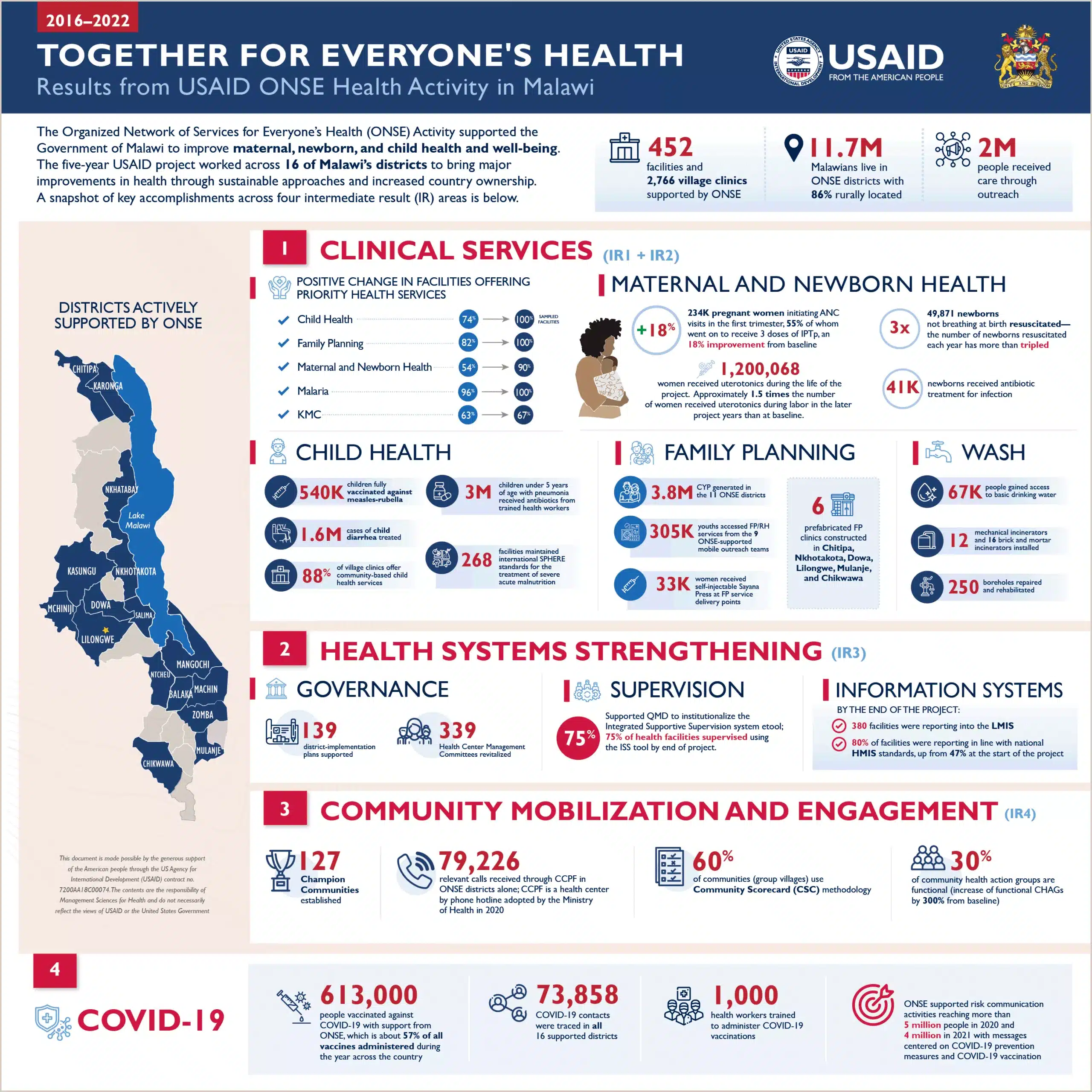
USAID’s flagship health program, the ONSE Health Activity, operated across 16 of Malawi’s health districts between 2016-2022, providing a package of health interventions to strengthen the health system and bringing major improvements through sustainable approaches and increased country ownership.

An “Insurmountable” Challenge: Reflections from Getting PPE to Health Workers in Malawi
Last year, Malawi received a much-needed shipment of PPE from China. PPE was an obscure acronym for many people prior to COVID-19. Today, these are products for which health workers are desperate. Miraculously, on March 25, 2020 Malawi received a shipment of PPE from...
Distributing PPE to Protect Health Workers in Malawi
Until recently, “PPE” was an obscure acronym for many people, but now it has become a vital commodity globally. Today, with the realities of COVID-19, health workers around the world are experiencing a troubling shortage of Personal Protective Equipment (PPE) – a mix of...
Changes at the Drugstore
Originally posted on The Medium. Many health facilities across Malawi don’t have enough trained pharmacy staff to adequately manage stock and dispense medicines. These tasks often fall on health care providers, who already have many other responsibilities, namely caring for patients. In some cases,...Background
ONSE was a maternal and child health systems strengthening program in Malawi aimed at reducing maternal, newborn and child mortality through a wide range of activities, including:
- improving access to better nutrition
- family planning, reproductive health, malaria, and WASH provision
- improving services through district level health system strengthening, and
- increasing demand for these services.
VillageReach worked in collaboration with Management Sciences for Health and other partners to implement USAID’s flagship ONSE Health Activity from 2016 until 2020, as the supply chain lead in 16 of Malawi’s 29 health districts. VillageReach’s activities strengthened supply chains from districts to health centers to village clinics.
How It Works
- Providing oversight and capacity building for supply chain activities at the health centers
- Expanding the use of pharmacy assistants as mentors to cluster facilities
- Improving health centers’ and districts’ ability to provide timely and accurate commodity data reporting
- Rolling out the mobile health hotline, CCPF, nationwide with key mobilization in the 16 ONSE districts
Resources

ONSE Health Activity Malawi – Final Report [Excerpt]
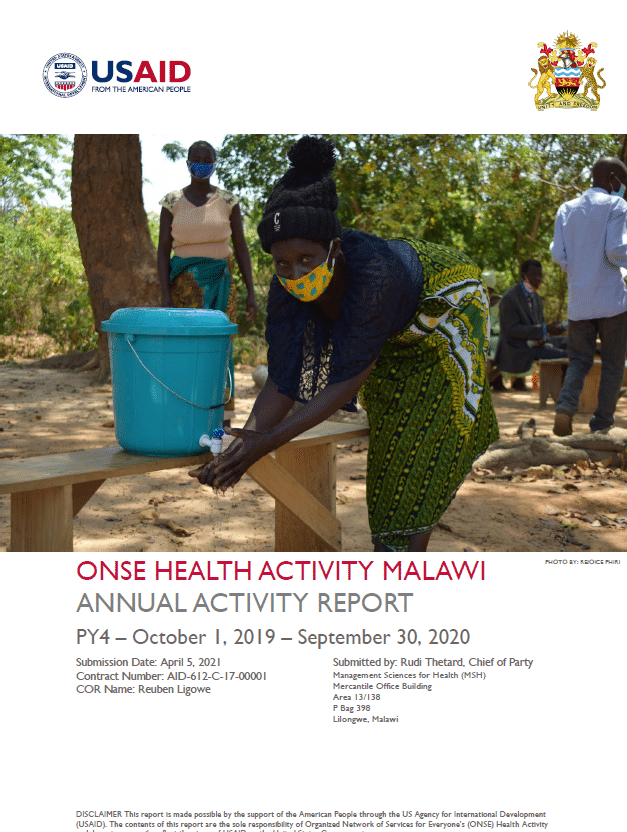
ONSE Health Activity Malawi – 2020 Report [Excerpt]

ONSE Health Activity Malawi – 2019 Report [Excerpt]
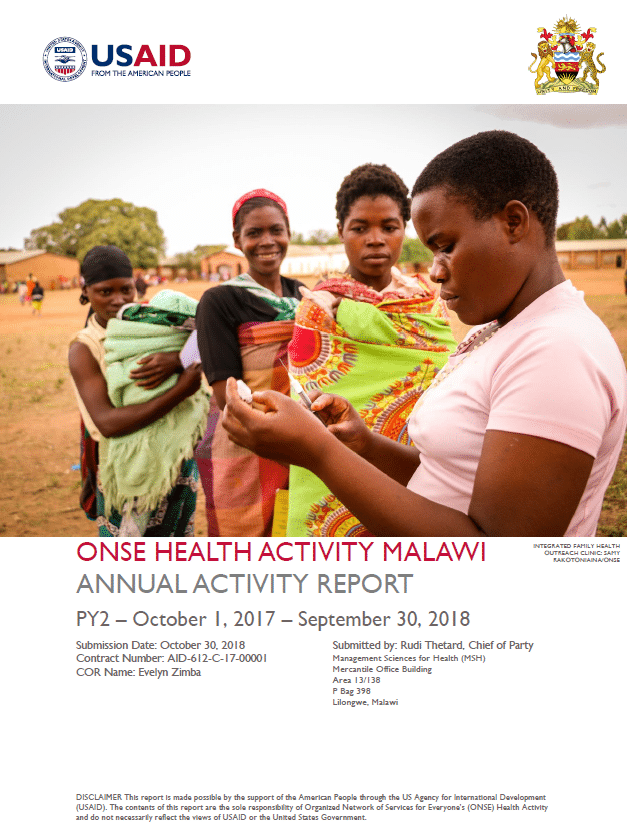
ONSE Health Activity Malawi – 2018 Report [Excerpt]
Program Impact
ONSE helped transform local capacity and health infrastructure across 16 districts, bringing essential health care services to more than half of Malawi’s population. ONSE assisted the government’s response to cholera, Cylcone Idai and COVID-19, enabling coordinated and rapid district-led response.
Partners

Government
- The Malawi Ministry of Health

Technical Partners
- Management Sciences for Health

Donors
- USAID
Related Global Impact
See the latest updates from our work to improve access to quality healthcare in the world’s most underserved communities.