
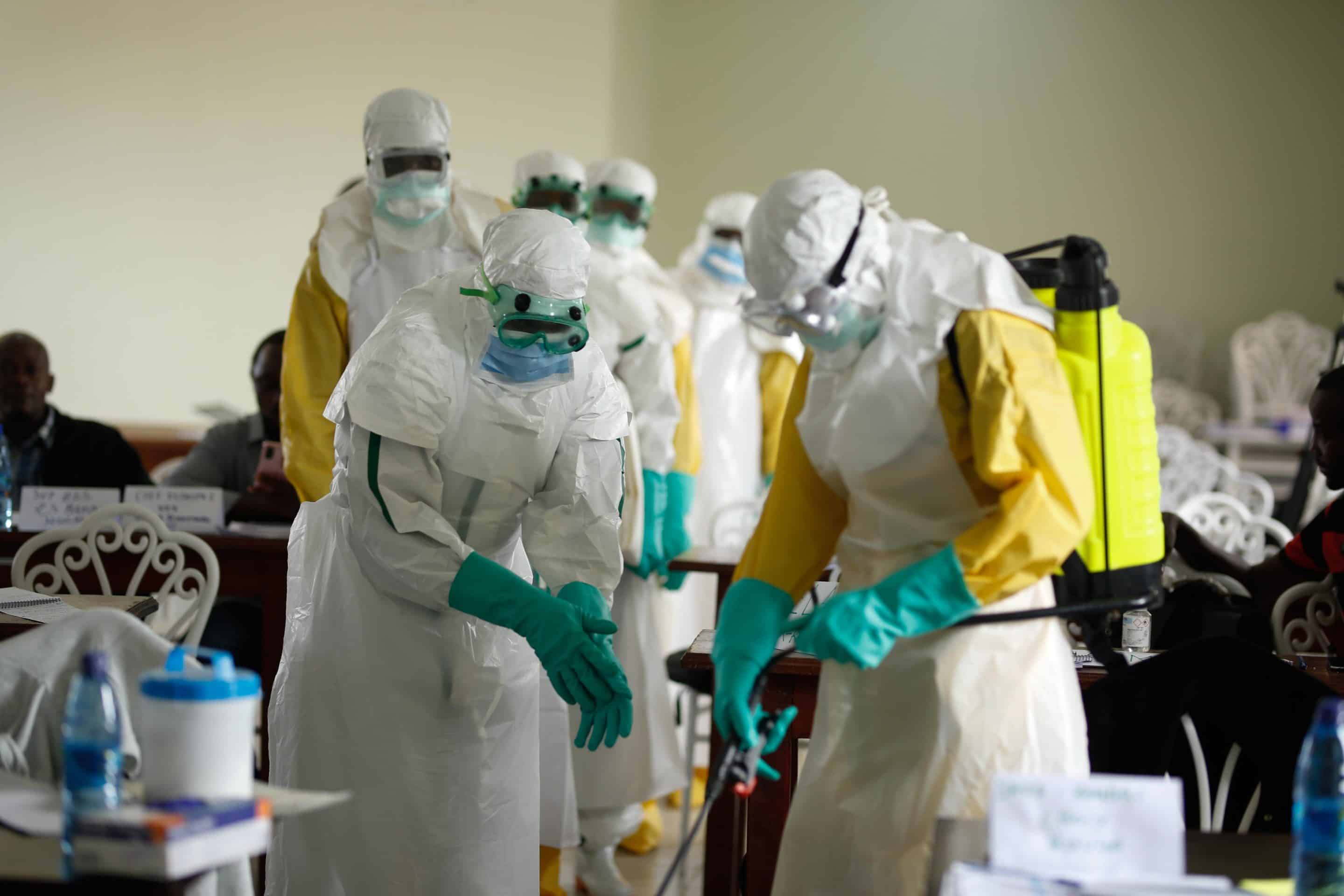

When Ebola emerged in Ituri province in May 2026, a trusted local distributor was already positioned to act. While response organizations mobilized funding and technical expertise, CAAMENIHU, a private distributor based in Aru in the northeastern Democratic Republic of Congo (DRC), helped ensure essential health products reached front-line health workers quickly. Since the outbreak began, it has supported the response in two critical ways: one, it supplied products from its own inventory, and two, it received, stored and distributed emergency commodities on behalf of response partners. That readiness was built in part through a partnership with VillageReach, launched in February 2025 to strengthen CAAMENIHU’s operations.
“Too often, preparedness is measured by what we stockpile. But preparedness is also about people, partnerships and supply chains,” said Freddy Nkosi, VillageReach DRC country director. “By strengthening local distributors before emergencies happen, countries create the capacity to move essential health products rapidly when communities need them most.”
During an outbreak, having supplies is only part of the equation. They must also reach communities quickly.
Responding when everyday counts
“When the first requests for Ebola-related supplies came in, we were not starting from scratch: We had stock available, our teams were ready and our distribution network was already operational,” said Jean Paul Mugisho, director of CAAMENIHU. “With VillageReach’s support to strengthen our operations, we were able to build on that foundation and respond quickly to the needs of response partners. For us, preparedness becomes meaningful when essential supplies can move out of the warehouse and reach the people who need them.”
In the initial phase of the Ebola response, CAAMENIHU distributed 6,800 oral rehydration salts sachets, 13,750 units of Ringer’s lactate infusion, 126 noncontact thermometers, 207 bottles of locally produced rubbing alcohol and 50 personal protective equipment kits.
In addition to supplying products from its own inventory, CAAMENIHU served as a logistics platform for other response partners. The organization received, stored and distributed 854 packages of emergency commodities on behalf of response organizations, helping ensure critical supplies reached affected areas quickly. As of November 2026, CAAMENIHU has supplied more than $81,000 worth of Ebola-related commodities. It has also managed the receipt, storage and distribution of an additional $87,000 worth of emergency commodities supplied by partners.
Strengthening the role of local distributors
CAAMENIHU’s role in the Ebola response is the result of investments that began more than a year before the outbreak.
Many health facilities face challenges accessing quality-assured medicines and health products. VillageReach supports pharmaceutical distributors and transporters in strengthening storage, transportation and distribution practices in line with World Health Organization Good Storage and Distribution Practices, helping ensure products maintain their quality from warehouse to end user.
In February 2025, VillageReach partnered with CAAMENIHU to strengthen its operational capacity as part of a broader effort to strengthen local distributors as health system partners. The partnership supported improvements in warehousing, inventory management, product traceability, transportation systems and access to working capital to build more resilient supply chains capable of serving both routine health needs and emergency response efforts.
During 2025, CAAMENIHU strengthened key aspects of its distribution system, improving vehicle compliance, delivery performance and on-time fulfillment across Haut-Uélé and Ituri provinces. These improvements helped create the operational foundation that enabled a rapid response when Ebola emerged.
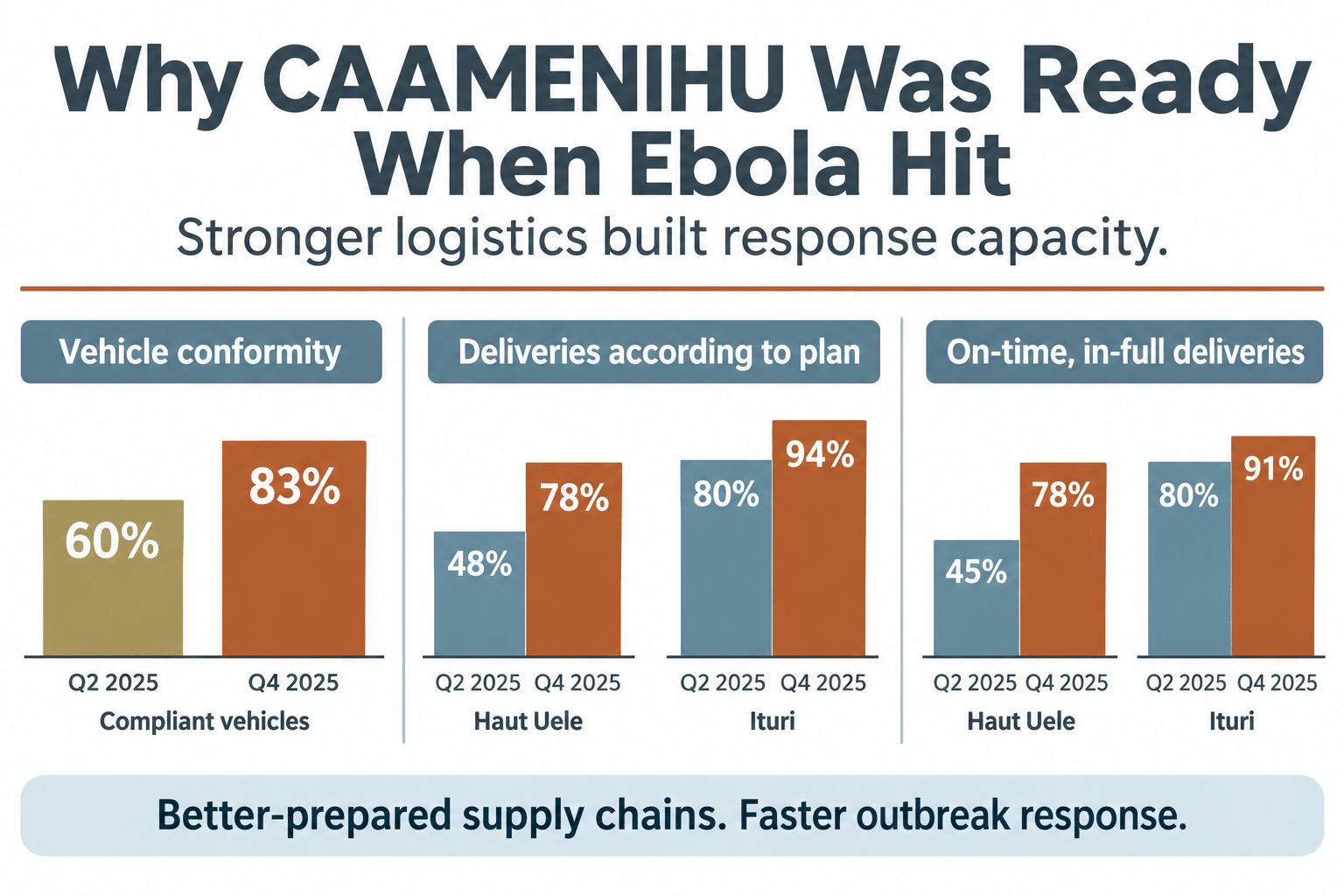
This progress was underpinned by targeted technical assistance to strengthen storage practices, improve inventory visibility, optimize warehouse operations and enhance product traceability throughout the supply chain. Together, these changes helped ensure health products could be stored, managed and delivered more reliably when demand increased during the Ebola response.
Distributors often need to procure, stock and transport products before receiving payment. Access to working capital has been particularly important for CAAMENIHU, helping the organization maintain inventory levels and continue operations as demand for essential supplies increased during the Ebola response.
The response continues to demonstrate the value of working through organizations already embedded in affected communities. Partners supplied through CAAMENIHU included community-based organizations, faith-based organizations and health facilities that already understood local health zones and had established relationships with community health workers and local leaders. By working through these partners, the response strengthened existing systems rather than creating temporary parallel distribution channels.
A model for future outbreaks
The ongoing Ebola outbreak is reinforcing lessons learned during previous mpox and COVID-19 responses: Effective emergency response depends on more than funding and medical expertise. It requires resilient supply chains, available stock and trusted local organizations with the capacity to act before a crisis escalates.
For CAAMENIHU, the outbreak is demonstrating how more than a year of investment in warehousing, distribution systems, technical capacity and working capital has translated into real-time response capability. For VillageReach and its partners, it provides a clear example of the preparedness dividend: investments made before an emergency can determine how quickly communities receive the supplies and support they need when one begins.