


Floods, droughts and cyclones – natural disasters frequently affect Mozambique and often lead to public health emergencies (PHE) across the country. These are exacerbated by inadequate environmental sanitation, limited access to safe water and population displacement, all of which contribute to the spread of communicable diseases.
To combat these public health emergencies and address the challenges that stem from them, the National Directorate of Public Health (DNSP) of the Ministry of Health (MoH), in collaboration with its partners (WHO, CDC, VillageReach Mozambique, USAID, MSF and UNICEF), conducted table-top exercises in Maputo Province and drill exercises in Zambezia Province in July. Together, we assessed the readiness at both central and provincial levels by testing coordination and operational capacity in the event of a cholera outbreak following a natural disaster.
Participants outlined steps for managing a cholera outbreak response, identifying challenges and barriers that may hinder an efficient and effective real-world response. Next, MoH leadership will assess the findings alongside those from previously conducted intra- and after-action reviews to take actions that address the identified challenges and enhance Mozambique’s public health response.
Provinces on the move: Experience drives improvement
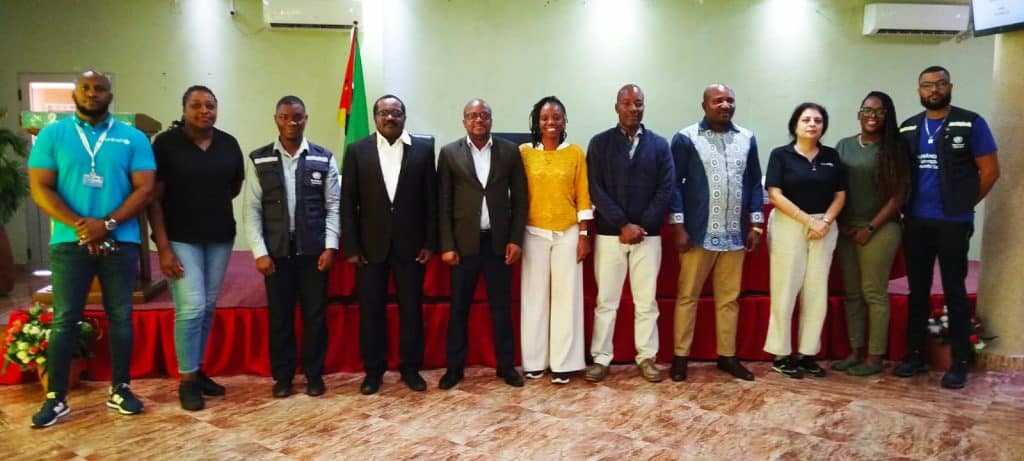
Partners during the opening session of the field exercise in Zambézia Province. Photo Credit: Arsenio Manhice
These exercises served to consolidate participants’ knowledge and expertise.
Leonido Janeiro, the Chief Medical Officer of Mocuba District in Zambezia Province, said that he learned the importance of rapid, multisectoral and coordinated responses, and the value of establishing trained teams ready for action.
“After the simulation, I feel more prepared to respond to PHE, especially cholera,” said Dr. Janeiro. He also emphasized his district’s strengths, which include good multisectoral coordination and active community surveillance.
Dr. Manuel Junior, Chief Medical Officer in Gurué District, also from Zambezia Province, highlighted the effectiveness of a coordinated, staged response and the importance of role clarity in PHE management.
“I feel more prepared to coordinate the management of PHE after this simulation,” Dr. Junior remarked. Despite challenges in coordinating with other district-level stakeholders, he praised the dynamism of the team and the active participation of community actors in spreading key messages for positive behavior change.
Dr. Isaias Manuel, Chief Medical Officer in Zambezia Province, learned the importance of a fully equipped and structured Cholera Treatment Center (CTC) during the exercise and noted qualified human resources and the existence of cooperating partners as strengths in his province.
From Maputo Province, Dr. Celestina da Conceição, Chief Medical Officer, gained her first experience of improving coordination with other sectors and understanding the responsibility of each health cluster through planning. She highlighted Maputo Province’s strengths, which include committed leadership, team cohesion, readiness and willingness to learn.
Dr. Cristina Moisés, Surveillance Officer from Zambezia, emphasized the importance of setting up CTCs with all necessary criteria for treating cholera cases. She noted the practical design of a joint and coordinated response strategy as a key takeaway from the exercise.
Participants found these exercises valuable in preparing for public health emergencies, but also pointed to challenges in their districts, which included insufficient funds and human resources, the need for timely transportation and communication, as well as the need for strengthened multisectoral collaboration.
The crucial role of facilitators and observers
Facilitators and observers offered valuable advice to the participants.
One of the observers was Dr. Jolene Nakao, the Associate Director of Global Health Security and Public Health Response at the Centers for Disease Control and Prevention (CDC) in Mozambique. In her view, a public health simulation exercise serves as a vital practice, training, monitoring and evaluation tool, as recommended under the Monitoring and Evaluation Framework of the International Health Regulations (IHR).
“A critical facet of a public health simulation exercise is the follow-up. Unless the lessons learned are incorporated into emergency policies, protocols and procedures, future response operations will not benefit from those lessons. The essential next step for MOH is to develop a plan of action to address challenges in a timely manner,” she stated.
Dr. Nakao recommended the development of a single comprehensive plan that outlines roles, responsibilities and communication channels among all actors. To be effective, a plan must be practical, regularly reviewed and updated based on lessons learned, widely disseminated and understood by all stakeholders.
Dr. Maimuma Luis, a facilitator from the MOH, emphasized the importance of understanding the local context during the preparation of field exercises, as this maximizes the reach and effectiveness of the activity. As a facilitator, she recognized that the participants and health services have strengths in their extensive experience in recurrent cholera outbreak management.
However, she advised participants to consult cholera response guidelines: “Technicians should consult cholera response guidelines and protocols to ensure the implementation of correct techniques. Coordination among response pillars is key to breaking the transmission chain of the disease.”
Dr. Maimuma noted that this exercise will enhance the skills of the technicians in responding to cholera outbreaks and highlighted that effective and efficient risk communication is crucial for the success of interventions.
VillageReach Mozambique: A strategic catalyst for change
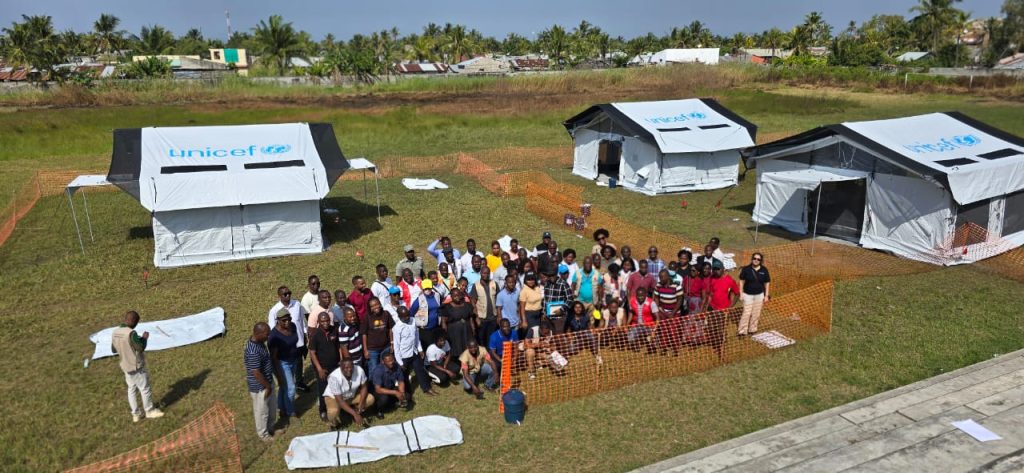
Installation of the cholera treatment center and testing of its flow during the field simulation. Photo Credit: Arsenio Manhice
Mozambique’s first-ever public health table-top simulation exercise, followed by a functional simulation exercise focused on response readiness in Zambezia Province, were both successful . In addition to these exercises, VillageReach has been providing support to the MoH for the operationalization of the Public Health Emergency Operations Center (PHEOC) in the country, and important milestones have been achieved, such as the approval of the PHEOC concept, the anchoring of the PHEOC within the MOH and the launch of the regional PHEOC in Tete Province.
Nilsa Mabunda, a consultant at VillageReach, noted that the exercise underscored the importance of meticulous preparation for PHE, particularly regarding cholera.
In her understanding, it is crucial to highlight the fundamental role of external partners such as the CDC, WHO, USAID, MSF, UNICEF and VillageReach, who significantly contributed as facilitators and technical evaluators during the exercise. Additionally, the ongoing commitment to training and capacity building of healthcare professionals and response teams is fundamental to improving preparedness and readiness standards.
“These lessons are essential to strengthening the preparation, readiness and response to future PHE in our region, ensuring a coordinated and efficient approach to save lives and reduce the impact of these events,” she said.
Lorna Gujral, Project Manager at VillageReach, said, “As partners, we are happy to continue providing support to the MoH. At VillageReach, we believe that strong preparedness and response to PHE is crucial for health quality to the population, especially the under-reached communities. The legal component, the operational and strategic document, as well as a roster of qualified staff, are key aspects of a fully operationalized PHEOC in the country.”
These exercises mark an essential step forward in the development of Public Health Emergency Management (PHEM) and the improvement of emergency response readiness in Mozambique, both critical components of health security.