


In Zanzibar, Tanzania, Rayuu Kombo now walks in her community with a stronger purpose. As a Community Health Worker, she is visiting households, checking on mothers and children, looking for danger signs and helping families seek care earlier.
This shift is part of a much larger effort through the Integrated Laboratory Transport Systems to Stop Outbreaks program, which is strengthening diagnosis and outbreak response across Africa. Supported by Takeda’s Global CSR Program, the initiative is improving lab sample referral, transport and data systems in the Democratic Republic of Congo, Guinea, Malawi, Tanzania and Uganda so that diseases such as polio, measles, yellow fever, Ebola, mpox and cholera can be detected and responded to more quickly.
From Uncertainty to Confidence
For Rayuu, before the project, she says her community was “lagging behind.” Health education on vaccine-preventable diseases (VPDs) was limited, misconceptions were common and many families delayed visiting health facilities. Some expectant mothers waited too long before attending antenatal care, while others turned to traditional healers first, even when serious illness was present.
“Before receiving this training, if I encountered a situation like a child with paralysis or convulsions, I would be afraid,” she explains. “I used to see children under two years old who had symptoms of paralysis and I treated it as a normal situation. But I realized later that it was actually measles or polio.”
With support focused on disease surveillance, vaccine-preventable diseases such as measles and polio and maternal health monitoring, Rayuu gained both knowledge and practical tools. These included a MUAC tape for nutrition screening and a blood pressure monitor. This led to more confidence in her job, as she learned how to use them.
“My routine has changed and now I focus on my community,” she says. “I visit my clients again and again to identify if there are cases of measles and polio.”
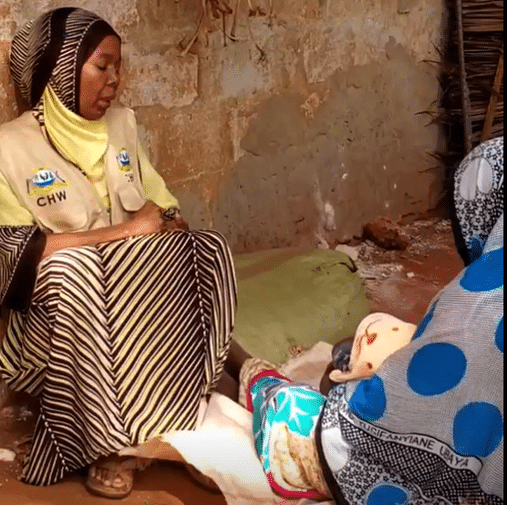
Rayuu Kombo, Community Health Worker, Chaani Kubwa, Zanzibar. Photo credit: Francisca Pratap
A Shift in Routine, A Shift in Role
Instead of waiting for people to come to her, she now goes to them. She checks on households repeatedly, follows up on immunization schedules and makes sure children do not fall through the cracks after their first doses. She asks these questions when she visits homes: Has this child completed their vaccinations? Has the 9-month dose been given? What about the 18-month dose?
In doing so, she has become a trusted bridge between her community and the formal health system. Where there was once fear, there is now action. Rayuu says mothers who once relied on herbal remedies are now more open to her advice. When she identifies a child with a rash or other danger signs, parents no longer hesitate to seek care.
“After getting the education, if I find a child with symptoms like measles or polio, I immediately refer them to a health facility,” she says.
This confidence has made a visible difference in her community. She is also helping families stay on track with vaccinations by checking clinic cards and reminding parents about follow-up doses. This kind of follow-up matters, as early detection can change outcomes.
Where Outbreak Prevention Begins
Her story reflects one of the silent but powerful lessons of the program: outbreak preparedness does not begin only in laboratories. It begins in communities, with workers who know what symptoms to look for, have the confidence to act and are trusted by the families they serve.
The Integrated Laboratory Transport Systems to Stop Outbreaks program is designed to support exactly that kind of readiness. By improving the integration of lab sample transport systems, strengthening sample quality during transit, improving notification and supporting faster outbreak response, the program is helping countries build more responsive health systems.
When community health workers are equipped with the right knowledge and support, they become the first line of defense by not only detecting disease earlier, but helping communities move from fear to vigilance. And for Rayuu Kombo, that shift has led to a lot of change.
“People in my community now receive me well because I give them education,” she says. “If I continued to just stay at my home and not visit my community, I wouldn’t know what is going on. But because I have the routine of visiting my community and clients frequently, I know my clients are safe.”