


Bringing Immunization to Where Life Happens
In Tanganyika’s Nyemba health district in DRC, a recent Periodic Intensification of Routine Immunization (PIRI) session didn’t happen in a health facility – it happened in the heart of the community, at the village chief’s house in Tabacongo. Just one kilometer from the main clinic, this simple change brought care closer to families who might otherwise struggle to make the trip. For many families, that short distance meant the difference between missing a vaccination and protecting their child’s future.
Holding the session in a place familiar to the community — where meetings, ceremonies and daily life naturally happen — drew more families than usual. Mothers arrived early, children played under the trees and health workers set up their tables under the chief’s hut.
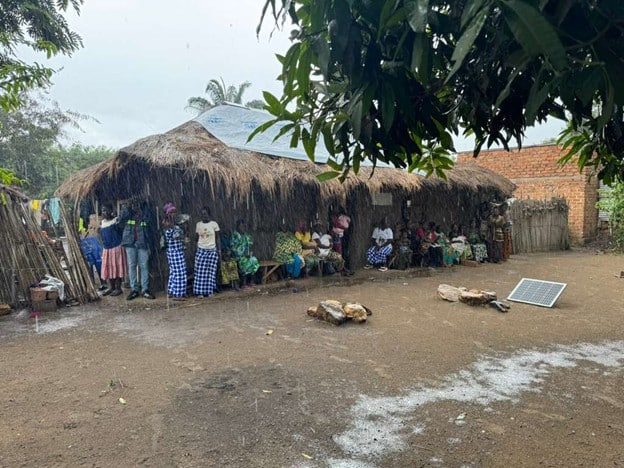
“Community members gathered at the chief’s village house, where the PIRI session was held — just one kilometer from the main health facility. Photo Credit: Mariam Zameer
The event had strong local support: the chief, the health district officer and the health facility staff all participated despite the pouring rain, underscoring the community’s shared commitment to protecting every child. Their presence transformed a routine vaccination session into a moment of collective purpose and pride.
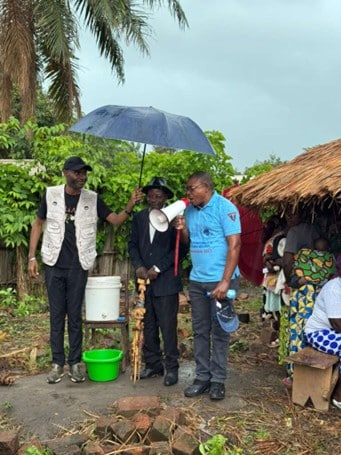
The chief, health district officer and health facility team united in support of the PIRI — demonstrating shared responsibility for protecting every child. Photo Credit: Mariam Zameer
CHWs: The Bridge Between the Health System and the Community
Community Health Workers (CHWs) were the driving force behind this PIRI’s success. In the days leading up to the session, they moved through the village, door to door – spreading the word, identifying pregnant women, tracking infants and making sure no zero-dose or under-immunized children were left behind. The efforts didn’t stop there: each caregiver received a token listing missed vaccines, a clever tool that helped health workers quickly identify what was needed and update the registers on the spot.
For many families, CHWs are more than messengers – they’re the trusted link to the health system. Their tireless work finding children, reminding families and rallying caregivers ensures that no child is forgotten.
One Mother’s Story: Reaching the Missed
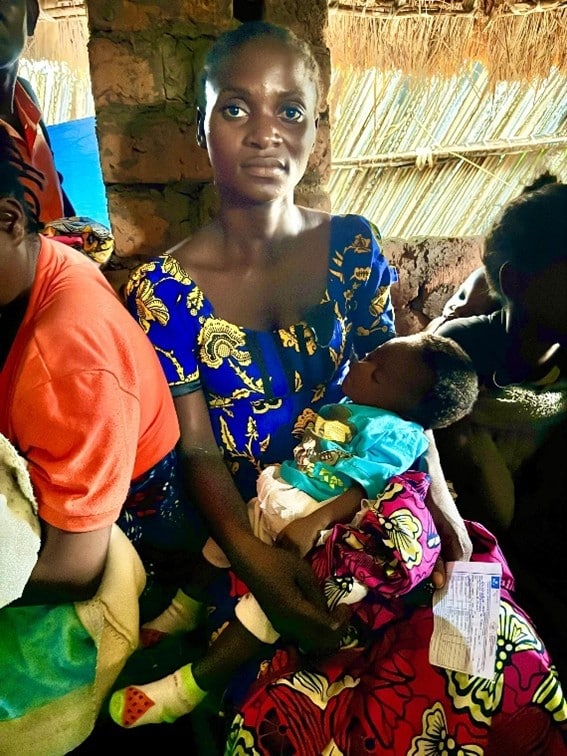
A mother cradles her five-month-old after receiving their first vaccine during the PIRIs session. Photo Credit: Mariam Zameer
Among those gathered was a mother cradling her five-month-old baby — a zero-dose child who had never received a single vaccine. Her two older children, aged seven and four, are fully vaccinated. She believes in vaccination, but life’s challenges have kept her from reaching the health facility until now. This session gave her the chance to protect her youngest child.
After giving birth, she returned to the fields nearly 20 kilometers away from the nearest health facility. Between caring for her newborn and working long days farming, making it to routine vaccination sessions was nearly impossible. The distance and demands of daily life kept health services out of reach.
The PIRIs changed everything. When she returned to her home village, the vaccination team was already there — right in the chief’s courtyard, just steps from where she was staying. The perfect timing and proximity meant her baby could finally receive their very first vaccines, opening the door to a lifetime of protection.
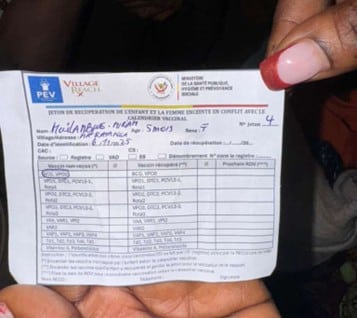
Tokens used by the health team help identify and track zero-dose children reached through PIRIs. Photo Credit: Mariam Zameer
Why Location Matters
Sometimes, convenience is the difference between a child getting vaccinated or left behind. A short walk, a familiar setting and the involvement of local leaders make it easier for caregivers to choose health amid the demands of daily life. By holding the session in the chief’s compound, families who might have been missed had the chance to show up.
A Small Distance, A Big Difference
By the end of the day, several children who had never received their first vaccines received their first doses — including the five-month-old baby who had been waiting since birth.
Reaching the last mile is often about reimagining the first mile — bringing health services to the places where life happens and designing systems that fit the realities of families’ daily lives. With strong leadership, empowered CHWs and partners like VillageReach driving innovation, communities are moving closer to a future where every child is reached.