


After four years of advocacy, VillageReach recently celebrated a critical policy milestone in the Democratic Republic of Congo (DRC).
In September 2025, the DRC government published a new legal text, the National Drug Supply System (SNAM) decree. This SNAM decree explicitly allows World Health Organization (WHO) certified and accredited private commercial pharmaceutical distributors to supply life-saving medicines to public hospitals and facilities. This marks the beginning of an enabling policy environment to get more health products to communities across DRC, whether they seek care at public or private health facilities.
The pathway to this milestone was, however, not simple. It required persistence, raising awareness, and change management along the way.
Building on What Works
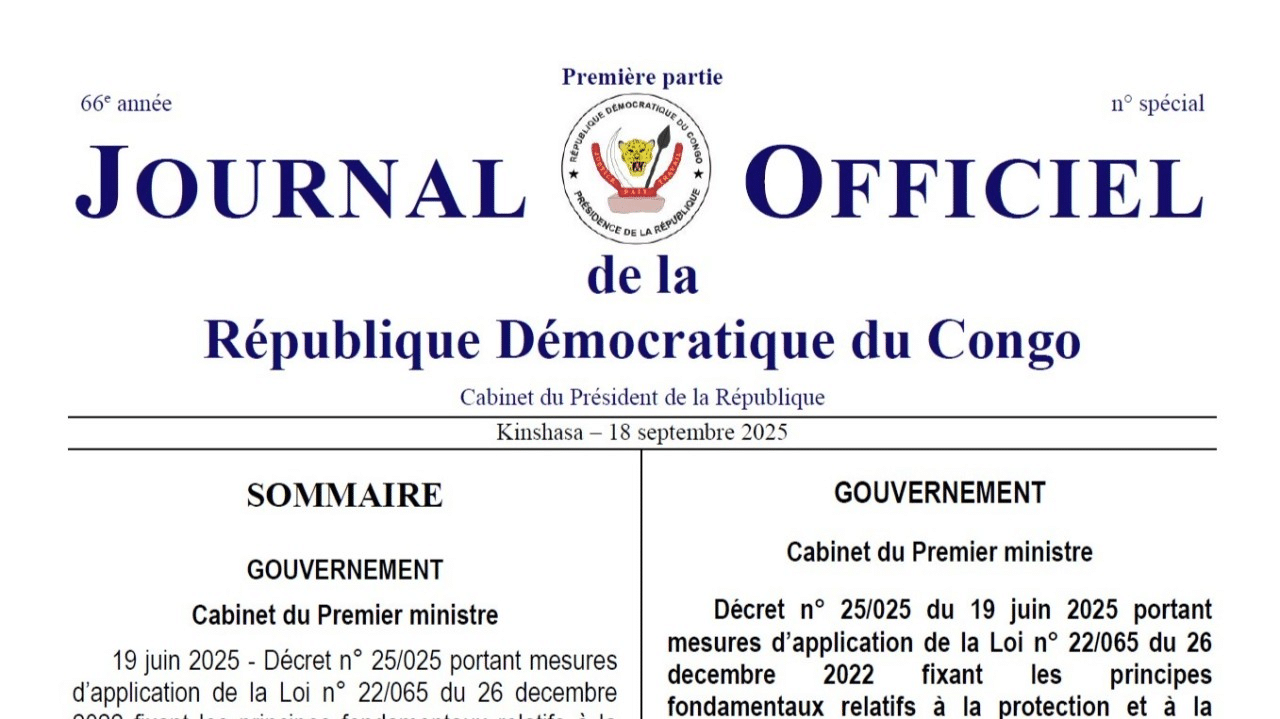
Publication du Décret SNAM au Journal Officiel.
Local pharmaceutical distributors in DRC play a key role in procuring, storing and distributing health products to private pharmacies, hospitals and health facilities across the country. In 2021, VillageReach set out to institutionalize and expand on a successful World Bank Project (Health System Strengthening for Better Maternal and Child Health Results Project (PDSS) 2016-2024) that leveraged private distributors to also supply health products to the public health system We set out to increase the use of private distributors by provincial health departments, starting in Sud-Ubangi province, to expand to other provinces.
However, we quickly realized the legal environment limited the role of local commercial private distributors. The 2018 Framework Law on Public Health was the first legal framework in DRC governing the public health supply system. While private distributors were included as SNAM stakeholders in the law, additional legal guidance was required for them to supply public hospitals and facilities. This meant private distributors needed an official SNAM decree added to the 2018 law to supply the public health system. Without this decree, the risk was too high for both private distributors and potential public health customers, effectively blocking collaboration.
Therefore, we worked with the DRC government to develop a legal framework that would explicitly allow private distributors to supply health products to the public health system. The government chose a decree as the best vehicle, and the language for the decree was finalized in 2022. While we were ready to celebrate, it took another three years before we could hold that celebration!
Advocacy: Consistent and Persistent
From 2022 to 2025, VillageReach worked hand in hand with national stakeholders, employing data-driven advocacy and sustained engagement to move the decree from draft to law. Engaging governments around policy change is never fast or easy. We had to demonstrate the relevance of policy change by raising awareness of the evidence on increased product availability at the health facility level already generated by the World Bank Project, and by gaining alignment on short and long-term benefits for all stakeholders. Additionally, we needed to build a strong coalition of support at the Provincial level to overcome resistance to change.
In total, we held five workshops to develop the decree’s detailed text. Given the complexity of the topic, no single stakeholder (government agencies, private distributors and technical and financial partners) wanted to take the lead on developing the decree, so VillageReach played a key role in setting the pace. The foundation of our advocacy work was strong, given that we had evidence of effectiveness, but we also built trust across different stakeholders. For example, our advocacy efforts with government emphasized the historical significance of this decree, as it would be the first of its kind. Our advocacy efforts with pharmaceutical distributors were more centered on the potential business opportunity and on highlighting the positive results from collaboration between distributors and government in Sud-Ubangi province.
Between finalizing the decree text and its actual publication, we also had to navigate several challenges beyond our control. First, there were changes in government leadership that in some cases required us to restart our advocacy efforts from scratch. For example, in 2023, DRC got a new prime minister, as well as new ministers of health in 2022 and 2025. Second, during this time, two other decrees related to the public health system were drafted, and all three were bundled together for approval. As the other two decrees were more controversial and generated greater debate, this slowed down approval of the first decree.
Stronger Supply Chains in DRC
The signing and publication of the SNAM decree is an important milestone for DRC in its efforts to achieve universal health coverage. We see the health system benefiting from this decree in three major ways:
- Access: Increased participation of local private commercial distributors in the public health system increases the availability of essential medicines.
- Quality: Increased use of WHO-certified private distributors, as mandated by the decree, will ensure quality medicine standards.
- Locally Sourced: Increased use of certified and accredited local private distributors by international donors creates new business opportunities for local distributors in DRC.
Change always takes time, especially when that change requires legal action. But the benefits of consistent advocacy are long-lasting. This decree in DRC may have taken four years to become effective, but its publication will benefit DRC for years to come. With legal permissions in place, more local private pharmaceutical distributors can supply the public health system, giving more people regular access to quality medicines. These are some of the ingredients needed to create a world where every person has the health care needed to thrive.