

Ensuring the long-term success of changes to the public health system is a complex but crucial undertaking. Today, we’re exploring VillageReach’s innovative approach to sustainability, Transitioning Well. We focus on handing over the management and operation of proven innovations to governments, private sector companies and local impact organizations. It isn’t simply about stepping away; it’s a carefully planned and executed transfer designed to strengthen programs and facilitate local ownership of health systems.
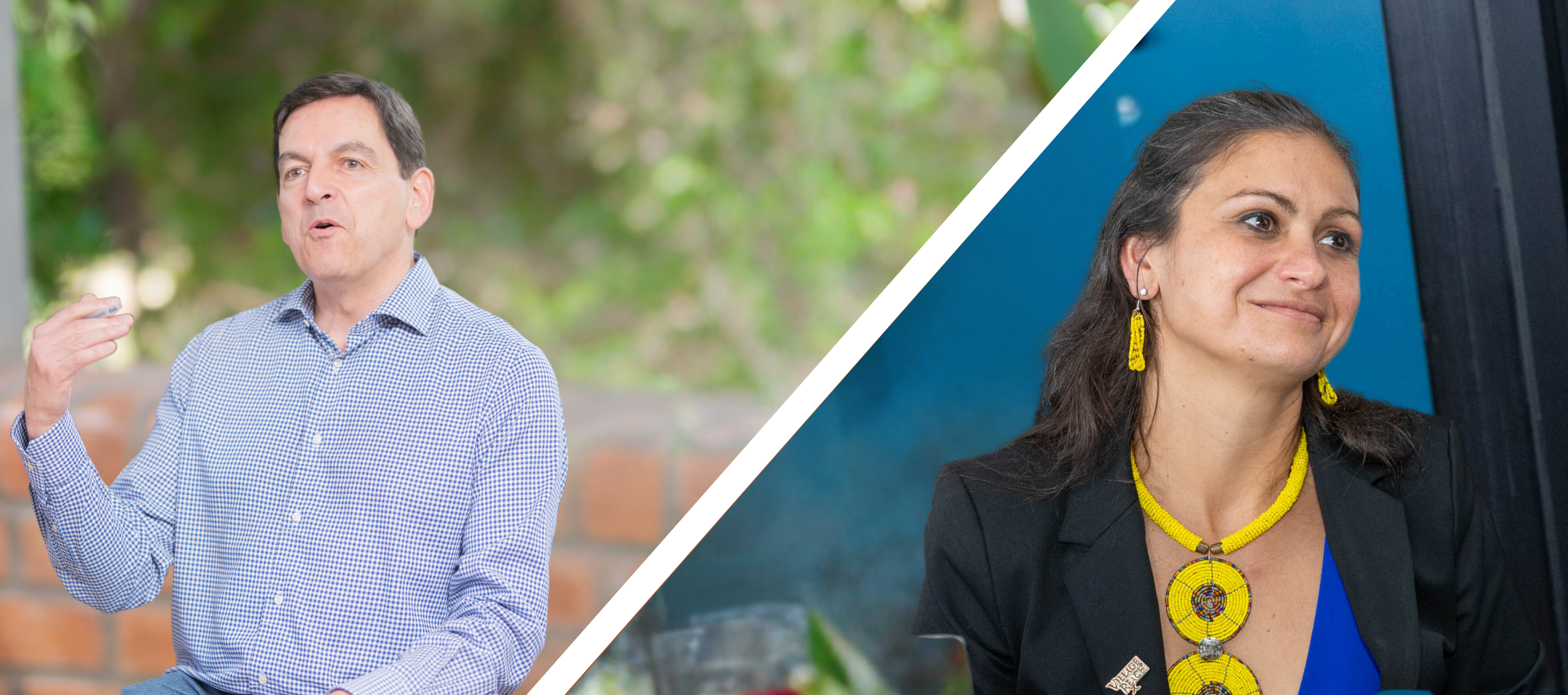
Joseph Roussel and Carla Blauvelt delve into the details of Transitioning Well, and how VillageReach builds capacity to ensure that positive health outcomes continue long after VillageReach’s direct involvement ceases.
What is the real problem you are trying to solve with Transitioning Well?
Joseph Roussel:
We need to see investments made in strengthening health systems turn into long-term sustainable in-country capability. Too many investments lead to solutions that don’t become part of public health systems and are essentially a waste of often scarce resources. You are probably thinking right now “yes, but there are hundreds of articles on the topic, so what new?” You are right; it’s not a new problem for sure. But the high failure rate that we are still seeing after decades of health systems strengthening programs suggests that we need to address sustainability in a very different way.
Carla and Joseph, why is this topic so important to you in your work in public health?
Carla Blauvelt:
VillageReach’s approach to working with government is the reason I joined the organization in 2015. We co-develop, cost, implement and measure solutions for impact, and if effective, scale and transition them. That said, at the time I joined, VillageReach didn’t have the processes in place to make this happen systematically. I think, in the end, we all want ongoing impact, and Transitioning Well has helped show our teams how to achieve it.
It has taken us several years to be able to share the approach because we must first walk the walk before we talk the talk. Seeing our whole sector embrace this mindset is what I would see as real success. With reductions in foreign assistance from countries like the US, now is a critical time to evaluate what sustainability looks like from a government’s perspective. Sustainability starts with making hard decisions on whether the solution is a priority and whether it is affordable over the long run – decisions that only government can make.
JR:
As Private Sector Engagement Lead, I work on building partnerships between private for-profit companies and governments so that these companies, including logistics firms, pharmaceutical distributors and mobile network operators (MNOs) provide services that make for stronger public health systems. To optimize the services they provide, private firms need to know what the path to sustainability looks like, specifically their role in the long term. Overall efforts on sustainability and transition to government can provide that clarity, making for stronger, more cost-efficient private sector service provision.
What is stopping organizations from addressing this sustainability challenge?
JR:
In the low- and middle-income countries (LMICs) where VillageReach works, there are obvious resource challenges with limited fiscal space to finance health. So, donor funding and technical partnerships are critical. These stakeholders’ voices, and their focus on program delivery and short-term impact, often dominate the discussion. Donor coordination challenges can make this situation even worse, although several initiatives have been launched in recent years, including the Shifting Systems Initiative (SSI) in 2016.
Another key barrier is a focus on “scaling up” as the silver bullet. This is often reflected in funding, where significantly more is spent on innovations and scaling solutions through partners than on government capacity building for adoption and institutionalization. We need to focus on the “Journey to Sustainability” with scaling being just one consideration! We also need to hear more government voices, including health workers themselves, on what works and doesn’t work when it comes to sustainability from LMICs going through the process.
You have coached teams through several challenging transitions involving government, local NGOs and the private sector. What are the biggest blockers to successfully transitioning solutions from a social innovator like VillageReach to a government?
CB:
Although many people think it’s government staff turnover or availability of financing, which are very difficult, I would argue it’s what could be called “the nuanced challenges” that are the most difficult aspects. For example, consider the personal and organizational impact of a transition. Am I going to lose my job? Is our organization going to lose its relevance? When transitioning the Health Center by Phone solution to the Malawi government, individuals had concerns about what that could mean for them and their jobs. Similarly, many organizations worry what transitioning their prized solutions could mean for their organization’s sustainability. These are very valid concerns. In the case of the Health Center by Phone, the staff was able to be absorbed by the Ministry of Health through long and careful transition management. Identifying these challenges and navigating through them requires management resolve as well as practical on the ground leadership. At VillageReach, we use Transition Coaches for this. As a coach I guide teams to identify who the transition will affect, plan the transition and constantly communicate as we execute the transition plan.
Does Transitioning Well require adopting a “radically different approach” to addressing sustainability?
CB:
If you look at the research on sustainability, it is full of point solutions (simplified interventions, co-development, domestic resource mobilization, scale-up models, etc.), all of which are important, but remain just building blocks. A radically different approach requires changing practices in donors, governments and implementers to ensure government is in the driver’s seat through a focus on government “adoption and institutionalization.” It would see more programs cancelled when faced with a lack of government adoption, more flexible funding mechanisms to allow reallocation of funds, clear exit strategies from implementers, and longer donor funding cycles to accommodate the time it takes to transition to government. These changes would be supported by new metrics such as % of sustainability indicators or milestones achieved, # of solutions with government commitment to adopt, # of solutions that have transitioned, and # of solutions that had sustained impact at least 12 months after end of funding.
Any final takeaways?
JR:
I agree with Carla. Real changes are needed among donors, governments and implementers. If programs were cancelled when there is no clear government will to adopt, that would truly be a radically different approach! In times of reduced funding, this approach is not a “nice to have” but a “must have”.
CB:
It can take time to institutionalize a new solution in a public system as this often requires capacity building, but a government commitment to adopt is the fundamental starting point.