
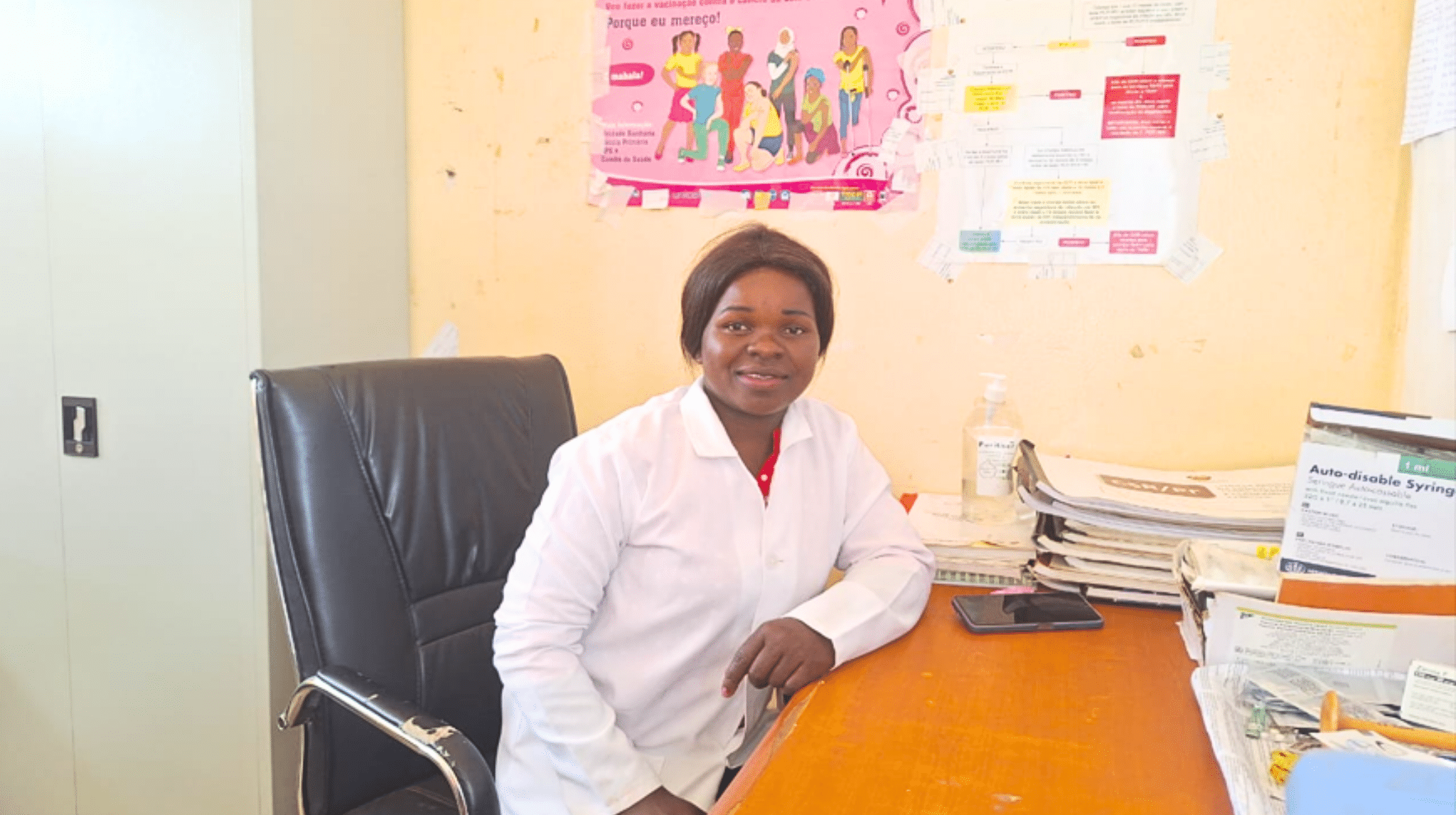


On a warm morning in the Tsangano District, Tete Province, the corridors of Banga Health Center are already filled with young people. Some come for counseling. Others for reproductive health services.
This is where we meet Delfina José Jairosse, a Maternal and Child Health (MCH) nurse working in the Adolescent and Youth-Friendly Services department (Serviços Amigos dos Adolescentes e Jovens (SAAJ) in Mozambique). Her consultation room is modest but welcoming. Posters line the walls. This is a safe and private space for young people.
And increasingly, it is also where they receive protection against one of the most serious health threats facing women in Mozambique: cervical cancer.
Mozambique has one of the highest cervical cancer burdens in the world. About 48 out of every 100,000 women are diagnosed there each year, more than three times the global average. Behind those numbers are mothers, sisters and daughters, many of whom could have been protected through HPV vaccination, which can prevent around 90% of cervical cancers when given at the recommended age. For Delfina, those statistics are the reason she starts each day determined to reach one more girl.
From Separate Activity to Seamless Care
For years, human papillomavirus (HPV) vaccination was delivered largely as a standalone activity through Expanded Program on Immunization (EPI) services, mobile brigades and schools. While some girls were reached through school visits and outreach, an infrequent and unpredictable schedule left access gaps.
Today, HPV vaccination is no longer treated as a separate issue in the Tsangano District. It has been integrated into adolescent and youth-friendly care, woven into the services young people already trust and use.
“[HPV vaccination] coverage has improved compared to the past, as HPV vaccination is no longer treated as a separate activity…instead of requiring girls to make a special trip just for HPV vaccination, we provide health information and vaccination during the same appointment they attend for counseling, reproductive health or other services,” Delfina explains.
This shift is part of the INTEGRATE HPV project led by VillageReach in partnership with national, provincial and district health authorities. In Mozambique, the project operated in Tsangano and Cahora Bassa districts of Tete Province to design, test and refine integrated service delivery models to increase HPV vaccination coverage.
The project helped facilities rethink workflows, strengthen coordination and build capacity of health workers and community members so that HPV education and vaccination can happen naturally within existing service platforms. Mozambique’s Ministry of Health hopes to build on this model and scale integrated HPV vaccination through adolescent- and youth-friendly services nationally.
Adolescent-Friendly Services in Transition
Delfina has specialized skills to provide services tailored to adolescents, including addressing HIV prevention, mental health, nutrition and now HPV vaccination, and all in one visit. Delfina is trained in how to understand what health questions have brought a girl to the facility, and to also navigate through other health topics and services that she may be interested in. Delfina and colleagues can provide counseling around HPV and the importance of vaccination, and the girl can choose to receive HPV vaccination then and there, without requiring another appointment.
Offering multiple services in a single visit transforms what could feel like a clinical procedure into part of a broader discussion about health and future aspirations. Adolescents can access vaccination at SAAJ, where they trust the professionals. The environment is designed for them. The staff is trained to communicate in clear, respectful language.
Building the Surrounding Ecosystem
But integration inside the facility is only part of the story.
Through the INTEGRATE HPV project, VillageReach and partners worked with communities, teachers, model mothers, adolescent peer educators and health workers to co-design solutions tailored to the local context. Teachers were trained to host school talks and jointly plan vaccination sessions with health staff. Model mothers and adolescent peer educators were trained on communication techniques and equipped with information, education and communication (IEC) materials to conduct community talks and household visits.
“I’ve already had two or three girls who didn’t know about this vaccine, but after awareness sessions, they got vaccinated,” Delfina shares proudly.
These efforts strengthened coordination between the health and education sectors and created clearer referral pathways. A girl might first hear about HPV vaccination at school, discuss it at home and then come to SAAJ with her mother, already informed and ready. Health workers say that this more connected approach is already changing how adolescents seek and move through services.
“The success [is that] we receive many adolescent girls coming from the school seeking our SAAJ services, counseling and other support,” a health worker in Cahora Bassa reported.
Evidence in Motion
The INTEGRATE HPV project is implementation research, designed for action and learning. The project tracked the uptake of HPV vaccination, as well as the usage of SAAJ.
The clearest evidence of change can be seen in the use of Adolescent and Youth-Friendly Services. Across Mozambique intervention sites, the number of SAAJ users increased from 53 at baseline to 382 at endline—a 621% increase. Over the same period, use at comparison sites fell from 554 to 120, a 78% decline.
Integration also moved from an idea into actual vaccine delivery. At baseline, no HPV vaccinations were recorded as being administered directly through SAAJ in either study arm. By endline, SAAJ nurses at intervention sites had administered HPV vaccine to 85 girls.
Health workers saw increased use of SAAJ services and the administration of HPV vaccinations through SAAJ as evidence of an integrated “one-stop service,” where each adolescent can receive multiple interventions during a single visit, thereby reducing missed opportunities.
A Healthier Future, One Visit at a Time
For Delfina, integration is a girl who comes for counseling on nutrition and leaves protected against HPV. It is a mother who understands the importance of cervical cancer prevention. It is a 9-year-old who is now welcomed into services that once felt out of reach.
By embedding HPV vaccination into adolescent-friendly services, Mozambique is moving toward a more holistic model of care that meets young people where they are. Through the dedication of professionals like Delfina and the technical partnership of VillageReach, adolescents and youth in Tete Province are better protected against HPV.
At Banga Health Center, the impact is visible. Each vaccinated girl walks away protected by a vaccine and by a system that sees her whole person.