


I will never forget my first trip to a mining area in Haut-Katanga province in Democratic Republic of Congo (DRC). After a few hours of driving on a path where we had to cross the river, we arrived in the Kyalwe health area where the head nurse told me, almost with resignation, that the children I would see vaccinated today would be gone tomorrow.
This revelation made an impression on me. It sums up one of the province’s greatest challenges: the constant mobility of populations, which complicates vaccination follow ups and continuity of care. Very quickly, I realized that working here was not simply about “implementing a program,” but rather about continuously adapting strategies to local realities: building community leadership, encouraging local ownership and looking for innovative solutions to reach mobile and dispersed populations.
Understanding Haut-Katanga
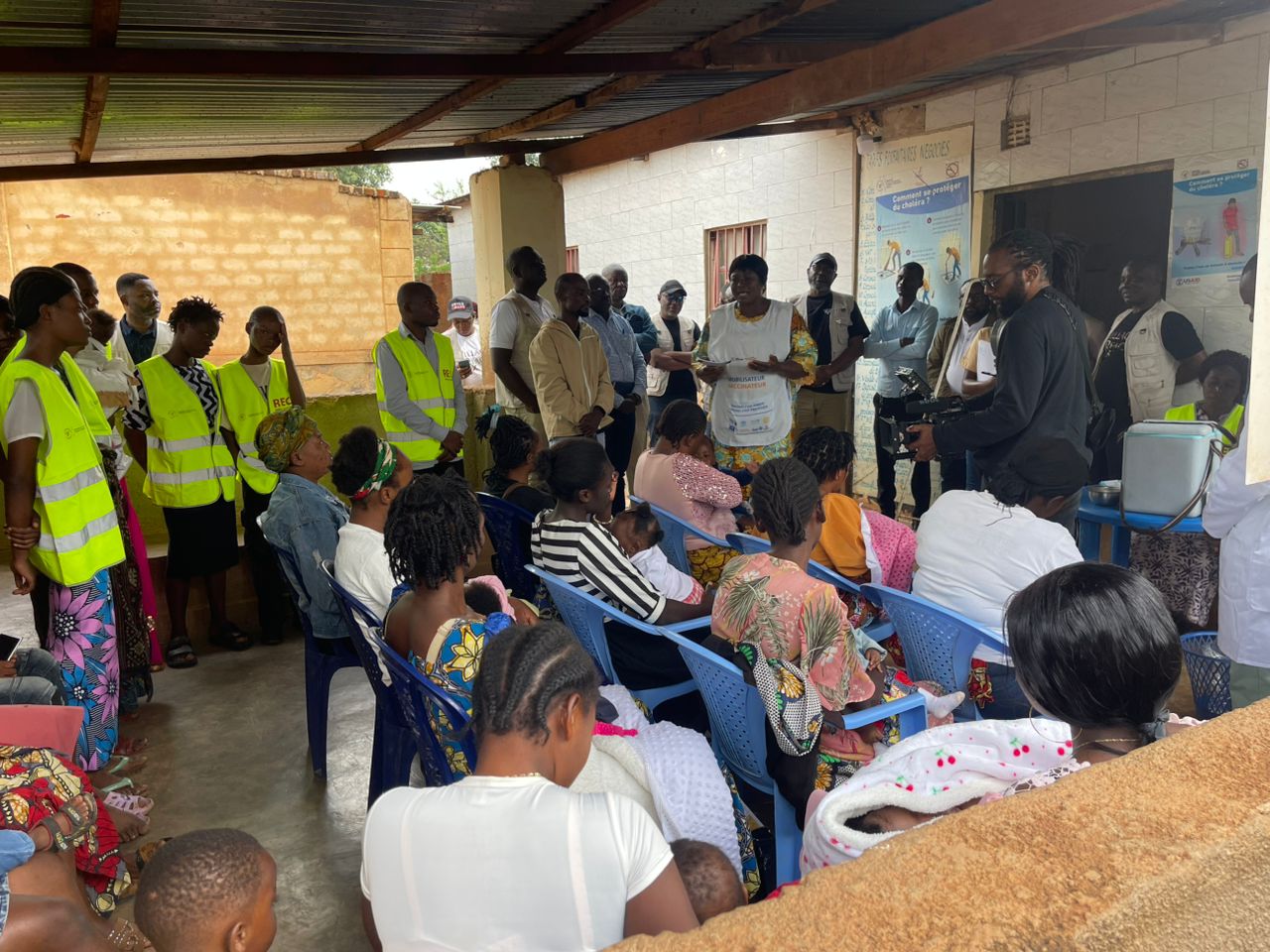
Vaccination session in Kipushi, Haut-Katanga Province, DRC. Photo Credit: Dr Fiston Banze.
Increasing vaccination rates in Haut-Katanga is marked with a few challenges. The province is an area with heavy mining, attracting workers from other provinces and neighboring countries. These populations move with economic opportunities and are difficult to reach with impassable roads during the rainy season impeding vaccine delivery. Often because these communities are so remote vaccine misinformation can be prevalent. And the local health facilities lack human, financial and logistical resources to ensure they find and vaccinate every child.
Since my arrival in Haut-Katanga last year, I have understood that my mission goes beyond the simple technical support of VillageReach- it requires transformational leadership to address complex dynamics. My role as a strategic facilitator and advisor to the provincial government is to (1) coordinate between the Provincial Health Division (DPS), health zones and technical and financial partners to ensure immunization interventions are effective; (2) ensure VillageReach’s interventions are integrated and aligned with DPS and the provincial Expanded Programme on Immunization (EPI) and (3) to offer targeted technical support by identifying challenges in immunization service delivery and co-creating solutions to meet community needs.
To do this work effectively, going into remote areas and visiting migratory communities is an essential requirement. The realities of urban areas such as Lubumbashi, the capital of Haut Katanga, differ greatly from those of remote rural and mining areas. My regular presence in rural areas is indispensable for gaining a concrete understanding of on-the-ground realities, observing the challenges faced by communities and health care professionals and tailoring interventions in a relevant and effective manner.
Strategies to Increase Vaccination
The positive impact of VillageReach’s support to date is no coincidence; it is built on concrete strategies, that are aligned with provincial priorities and adapted to the context of Haut-Katanga. Our interventions in the province focus on three main areas: improving data quality, reaching zero-dose children and strengthening community engagement.
Effective health decisions are based on reliable data. VillageReach contributes to improving data quality by strengthening the capacity of provincial management teams and health facilities in the use of data collection, analysis and validation tools. By strengthening data management capacities, the province can quickly identify gaps in vaccination coverage and to provide targeted responses to identify and reach more zero-dose (children who received no vaccinates) and under-vaccinated children. Armed with reliable data we also support the province in microplanning, community mapping and organizing outreach strategies to identify and vaccinate more than 15,000 zero-dose children and 25,000 under-vaccinated children.
Finally, because we know it takes a whole communities and motivated health workers to vaccinate every child we played key role in strengthening community engagement by collaborating with community health workers (commonly referred to as relais communautaire or RECOs in DRC), religious leaders and local authorities. With our support, the province has improved outreach activity planning and increased health worker motivation. Overall, we have witnessed a transformation of the provincial health system that demonstrates how well-structured technical support can strengthen a provincial health system sustainably.
A Collective Commitment
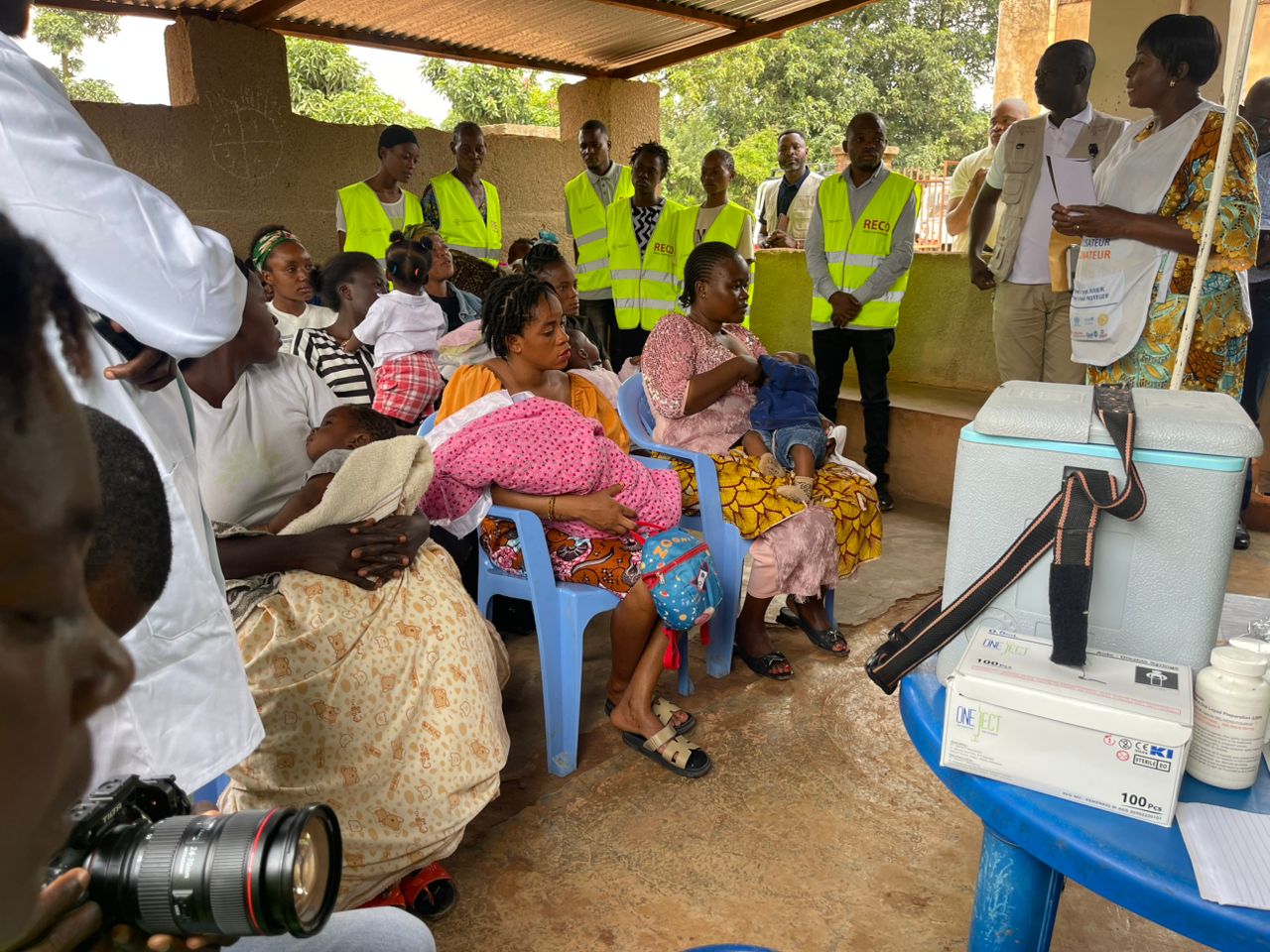
Vaccination session in Kipushi, Haut-Katanga Province, DRC. Photo Credit: Dr Fiston Banze.
Serving the Haut-Katanga community is a responsibility that requires vision, resilience and collaboration. The achievements to date are encouraging, but they represent a step in a continuous process of improvement. We know that to reach every child we must:
- Innovate continuously to meet the needs of mobile communities (like mining communities) and adapt to realities on the ground.
- Strengthen local leadership to build trust, facilitate adherence to immunization activities, and create greater local autonomy in the face of health challenges.
- Give communities ownership of interventions to promote trust, build solutions that work for them and encourage active community participation.
- Develop sustainable solutions that strengthen local systems, have stable funding and offer continuous training for health workers.
At VillageReach we know that access to quality immunization services matters. That is why we invest in vaccination, because it means investing in children, communities and health workers. It means investing in the future health and well-being of the entire province.